

Harry Potter Spells – The Ultimate Guide to Spells and Charms
In J.K. Rowling’s extraordinary Wizarding World, magic is far more than a chaotic force. It is a fascinating discipline governed by strict rules, where wand movements, focused intent and the precise words of a spell (incantation) work together to produce extraordinary magical effects.
Most Harry Potter spells draw on Latin or Greek roots, lending their incantations a sense of history and scholarly tradition. For Hungarian readers and filmgoers, the spells acquired an additional layer of character through the inventive work of translator Tamás Boldizsár Tóth. Several original English incantations received memorable Hungarian equivalents, such as Capitulatus for Expelliarmus and Comikulissimus for Riddikulus.
In this comprehensive guide, we've brought together some of the most important, recognisable and fascinating Harry Potter spells from the books and films. Explore their original incantations, meanings, effects and the iconic moments when our favourite witches and wizards – or their enemies – cast them. Along the way, we'll also highlight a few intriguing differences found in the Hungarian translations.
1. Essential Harry Potter Spells: Everyday Charms
During their first years at Hogwarts, students learn charms that allow them to interact with and manipulate the physical world. These spells form the foundation of everyday wizarding life.
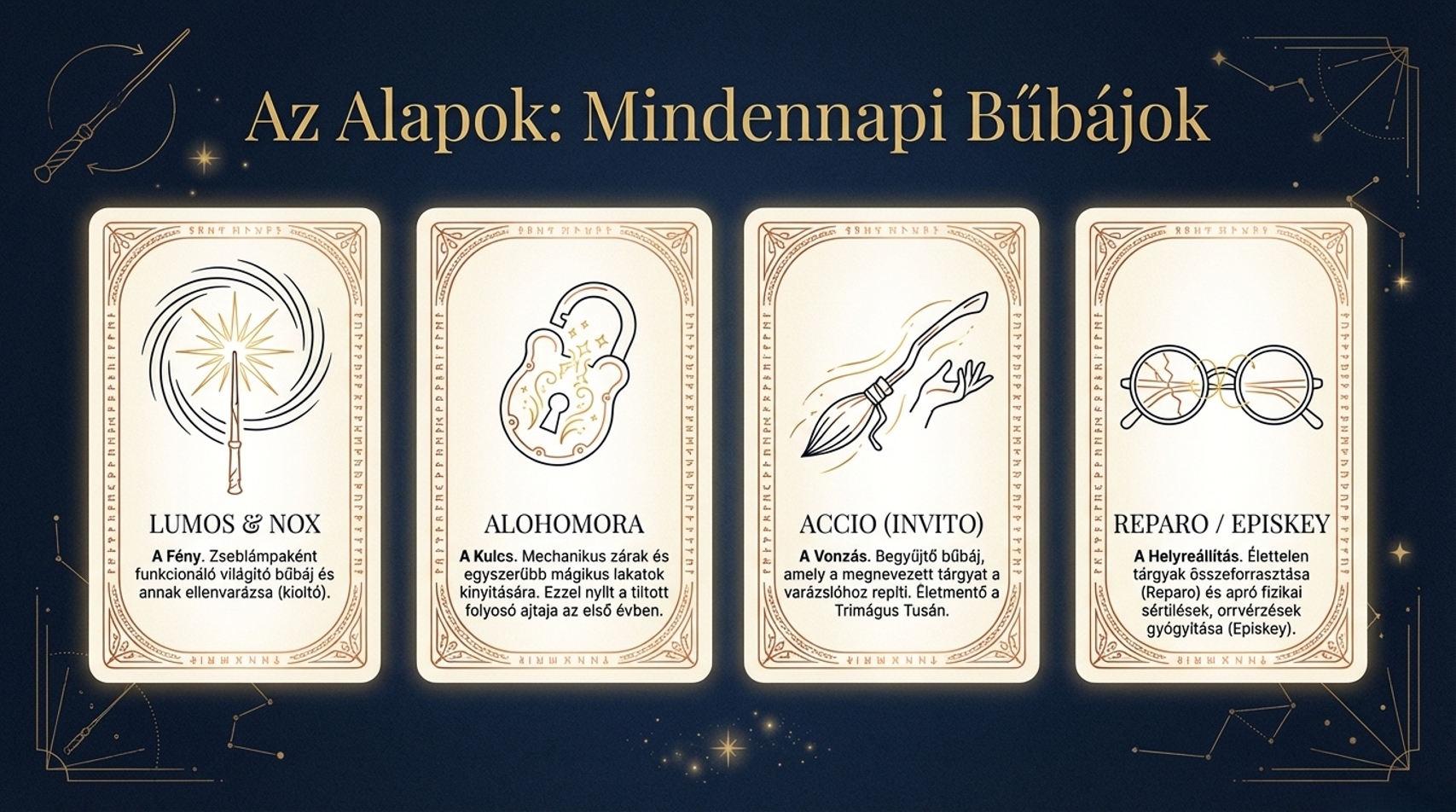
- Accio – Summoning Charm: This spell summons a specified object to the caster, even from a considerable distance. The incantation draws on Latin roots associated with calling or summoning; in the Hungarian translation, it is known as Invito. Famous example: During the first task of the Triwizard Tournament, Harry Potter uses Accio to summon his Firebolt broomstick while facing a dragon.
- Alohomora – Unlocking Charm: Used to open ordinary locks and certain magically secured doors. Although more sophisticated magical locks can resist Alohomora, the spell is invaluable for overcoming simpler obstacles. Famous example: In their first year, Hermione Granger unlocks the door to the forbidden third-floor corridor while the trio are trying to avoid Filch – and they discover Fluffy, the three-headed dog, waiting inside.
- Lumos – Wand-Lighting Charm: Produces light from the tip of a wand, turning it into a magical torch. The name is related to the Latin lumen, meaning light. Famous example: In the film Harry Potter and the Prisoner of Azkaban, Harry uses Lumos Maxima beneath his bedcovers to illuminate his book at night.
- Nox – Wand-Extinguishing Charm: The counterpart to Lumos. It extinguishes the light shining from the tip of the caster's wand.
- Wingardium Leviosa – Levitation Charm: Allows the caster to lift and move objects through the air. The Hungarian spelling is Vingardium leviosa. Famous example: In their first year, Ron Weasley levitates a mountain troll's own club and drops it onto the creature's head in the girls' bathroom. Hermione's memorable correction of his pronunciation – “It's LeviOsa, not LeviosA!” – remains one of the series' best-known classroom moments.
- Aguamenti – Water-Making Spell: Conjures a jet of clean water from the tip of a wand. Famous example: In Harry Potter and the Half-Blood Prince, Harry attempts to give an exhausted Dumbledore water in the lakeside cave. The spell is also used to fight the flames engulfing Hagrid's hut.
- Reparo – Mending Charm: Repairs broken or damaged objects, restoring them to their former condition. Famous example: In the film adaptation of Harry Potter and the Philosopher's Stone, Hermione repairs Harry's glasses aboard the Hogwarts Express using the related incantation Oculus Reparo.
2. Combat and Defensive Spells: Defence Against the Dark Arts
As the story progresses, duelling and defensive magic become increasingly important. These spells can disarm opponents, incapacitate them, repel attacks or force enemies backwards.
- Expelliarmus – Disarming Charm: Forces a wand or other weapon out of an opponent's hand and, when cast with sufficient force, may also knock the person backwards. Its name evokes the idea of driving away a weapon; the Hungarian translation uses Capitulatus, a reference to surrender. Famous example: Severus Snape disarms Gilderoy Lockhart at the Duelling Club. The spell later becomes Harry's signature move, culminating in his final confrontation with Voldemort, when the Dark Lord's own Killing Curse rebounds.
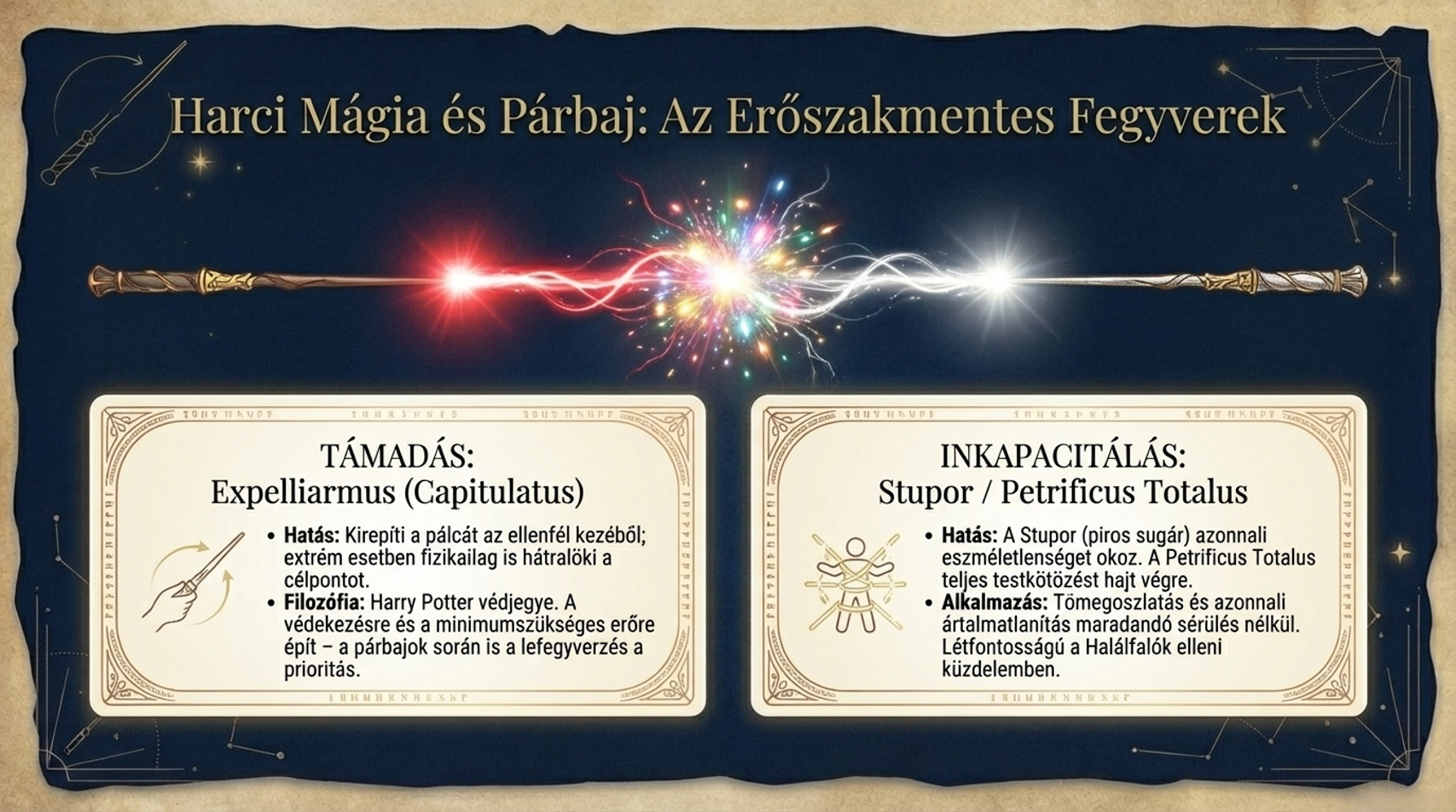
- Stupefy – Stunning Spell: Usually depicted as a jet of red light that renders its target unconscious. It is called Stupor in the Hungarian translation. Famous example: Professor Minerva McGonagall is struck by four Stunning Spells and must be treated at St Mungo's Hospital for Magical Maladies and Injuries.
- Petrificus Totalus – Full Body-Bind Curse: Causes the victim's body to become rigid, leaving them unable to move. Famous example: Hermione uses the curse on Neville Longbottom in their first year when he tries to stop Harry, Ron and Hermione from sneaking out of the Gryffindor common room at night.
- Protego – Shield Charm: Creates a magical barrier that can deflect many minor spells and repel certain physical attacks. Famous example: Harry teaches defensive magic to members of Dumbledore's Army, and Shield Charms become invaluable in their later battles against Death Eaters.
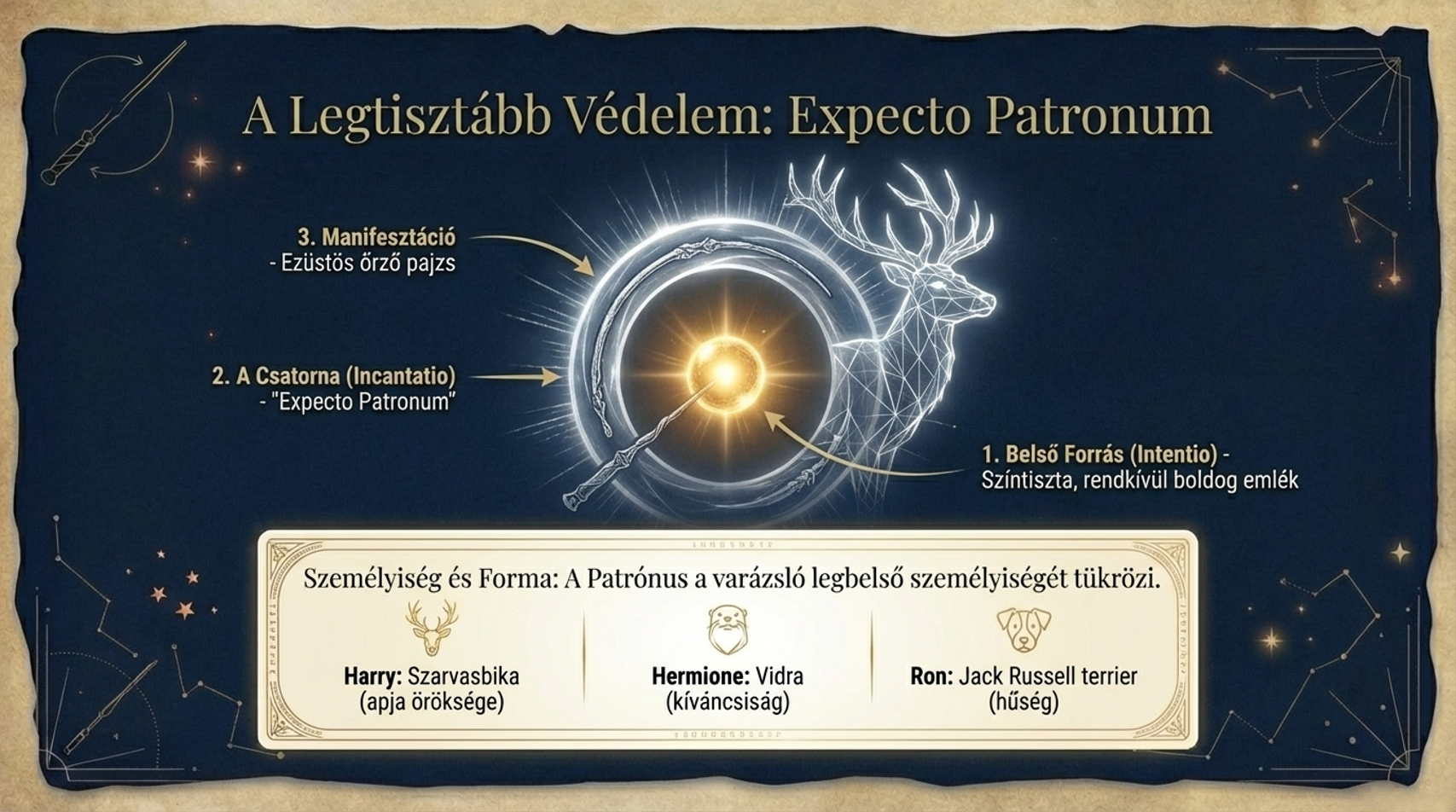
- Expecto Patronum – Patronus Charm: One of the most demanding and powerful defensive spells, used to conjure a silvery guardian capable of repelling Dementors and Lethifolds. Casting a successful Patronus usually requires concentrating on a deeply happy memory. Famous example: Remus Lupin teaches Harry the spell. Harry eventually produces a corporeal Patronus in the shape of a stag, using it to drive away a swarm of Dementors by the lake at Hogwarts.
- Riddikulus – Boggart-Banishing Spell: A Boggart takes the form of whatever its victim fears most. This spell forces the creature into an absurd, amusing form, allowing laughter to overcome fear. In the Hungarian translation, the incantation is Comikulissimus. Famous example: Neville Longbottom transforms a Boggart resembling his feared Professor Snape into a figure dressed in his grandmother's clothes, complete with a hat decorated with a stuffed vulture.
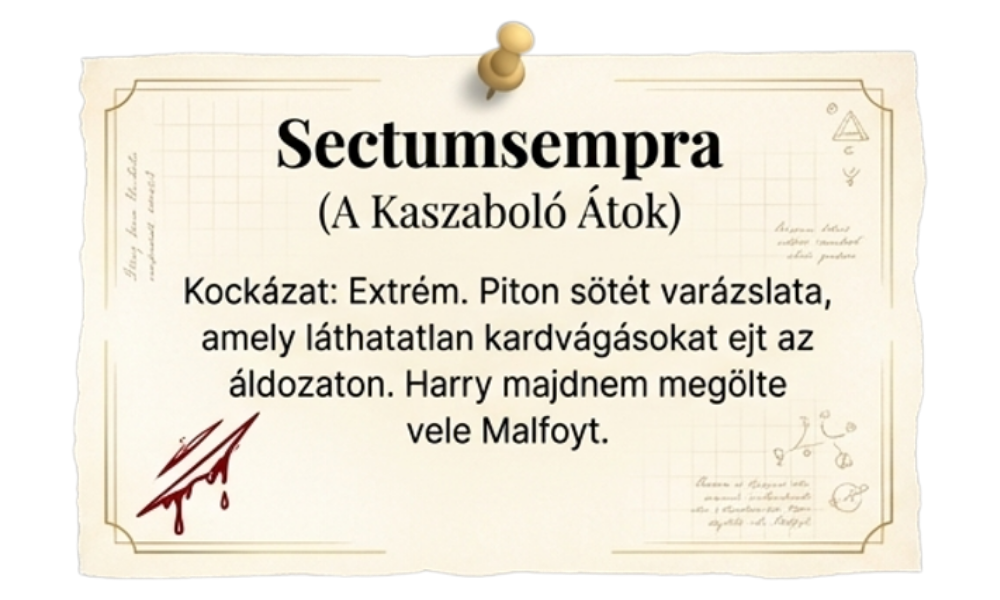
- Sectumsempra – Dark Cutting Curse: An exceptionally dangerous spell that inflicts deep wounds as though the victim had been slashed by invisible blades. The injuries may be severe or even fatal. Famous example: Severus Snape invents the spell during his school years. Harry later casts it against Draco Malfoy in a Hogwarts bathroom without understanding its effects, nearly killing him.
- Confringo – Blasting Curse: Causes the targeted object to explode, often producing flames or considerable destruction. Famous example: In Harry Potter and the Deathly Hallows, Hermione uses the Blasting Curse while Harry and Hermione are escaping from Nagini in Godric's Hollow.
- Diffindo – Severing Charm: A useful spell for precisely cutting or splitting objects, including ropes and fabric. Famous example: In Harry Potter and the Goblet of Fire, Harry uses it to tear Cedric Diggory's bag so he can speak to him privately.
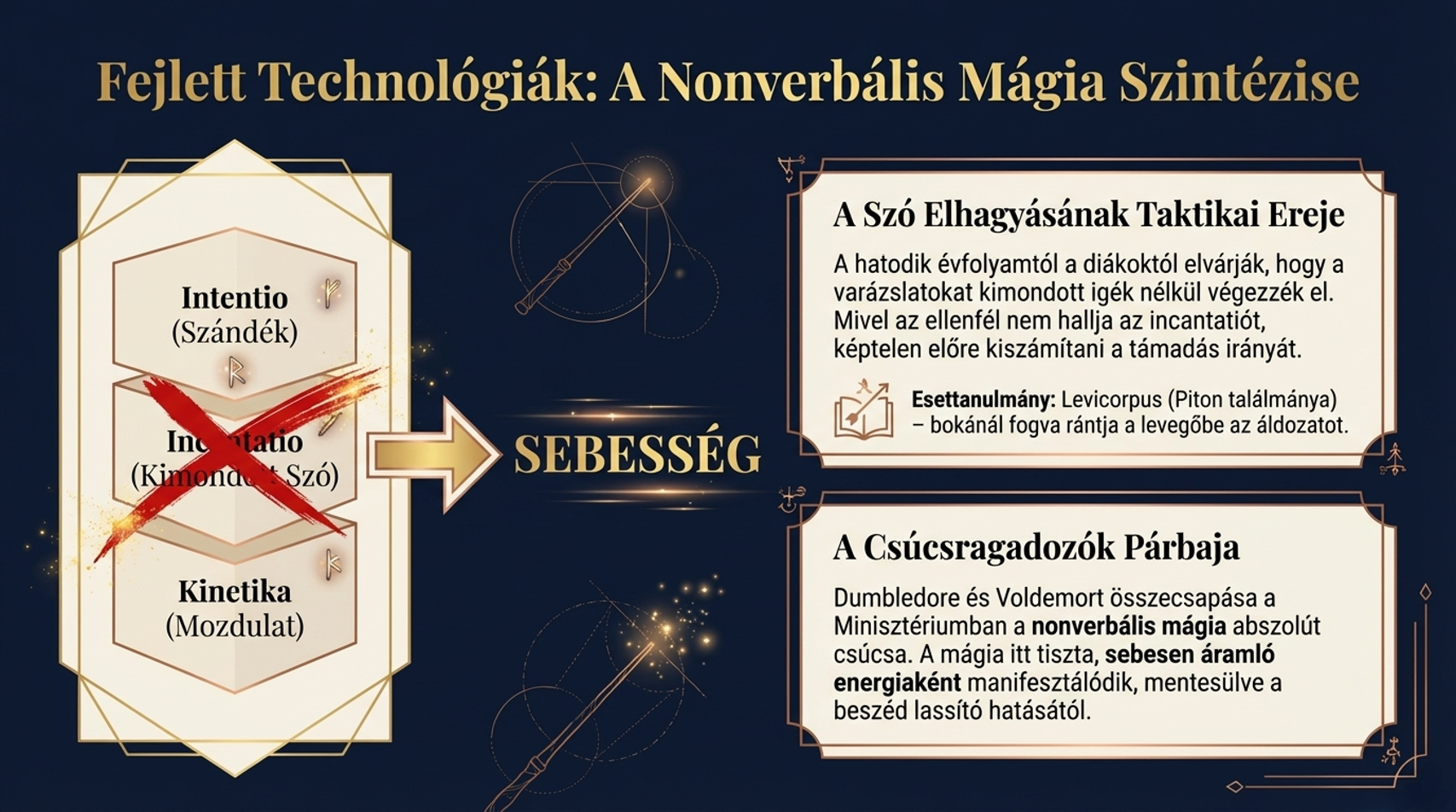
One of the greatest demonstrations of duelling skill is non-verbal magic. Spells such as Snape's Levicorpus, which hoists its victim into the air by the ankle, can be cast without speaking. In the spectacular confrontation between Dumbledore and Voldemort, spells follow one another so rapidly that saying every incantation aloud would only slow the duel.
3. Magic That Influences the Mind and Memories
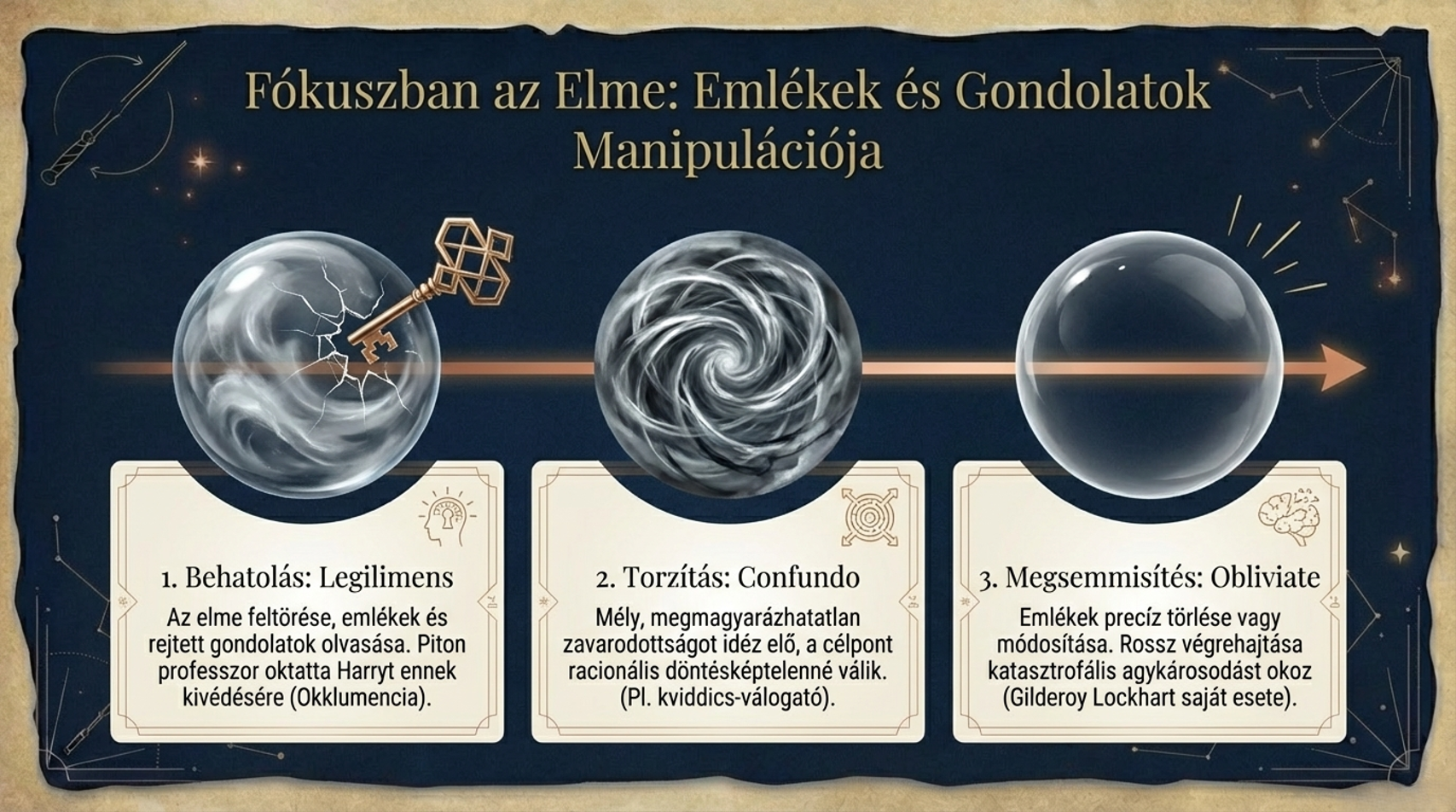
- Legilimens – Legilimency Spell: Allows a skilled witch or wizard to enter another person's mind and perceive thoughts, emotions and memories. Famous example: Severus Snape uses Legilimency during Harry's Occlumency lessons in Harry Potter and the Order of the Phoenix. Occlumency is the magical discipline of protecting the mind against such intrusion.
- Confundo – Confundus Charm: Causes confusion, making its target more vulnerable to mistakes and manipulation. Famous example: Hermione casts this charm on Cormac McLaggen during the Gryffindor Quidditch Keeper trials, causing him to misjudge a save and helping Ron's chances of being selected.
- Obliviate – Memory Charm: Used to erase or modify memories. If performed incorrectly, memory magic can cause lasting damage. This spell is known as Exmemoriam in the Hungarian translation. Famous example: Gilderoy Lockhart attempts to use it on Harry and Ron in the Chamber of Secrets, but the spell backfires because of Ron's broken wand, severely damaging Lockhart's own memory.
4. The Three Unforgivable Curses
These are among the cruelest forms of Dark Magic in the Wizarding World. As explained in the books, using any one of the Unforgivable Curses on another human being is enough to earn a life sentence in Azkaban.
- Avada Kedavra – Killing Curse: Typically accompanied by a flash of green light, it causes instant death without leaving ordinary physical injuries. A conventional Shield Charm cannot block it. Famous example: Lord Voldemort uses the Killing Curse to murder Harry's parents, James and Lily Potter. Harry becomes famous for surviving an attack that should have killed him.
- Crucio – Cruciatus Curse: Inflicts excruciating pain and suffering on its victim. Prolonged torture with this curse can cause permanent psychological damage. Famous example: Bellatrix Lestrange and other Death Eaters torture Frank and Alice Longbottom, Neville's parents, until they lose their sanity.
- Imperio – Imperius Curse: Allows the caster to control another person's actions and suppress their free will. The victim obeys commands as though manipulated like a puppet, although those with exceptional strength of mind may be able to resist. Famous example: Barty Crouch Jr, disguised as Alastor 'Mad-Eye' Moody, demonstrates the curse on a spider during a Defence Against the Dark Arts lesson.

5. Unusual, Useful and Lesser-Known Harry Potter Spells
The Harry Potter books are filled with smaller charms and enchantments that are sometimes amusing, sometimes surprisingly practical, and always help make the Wizarding World feel wonderfully detailed.
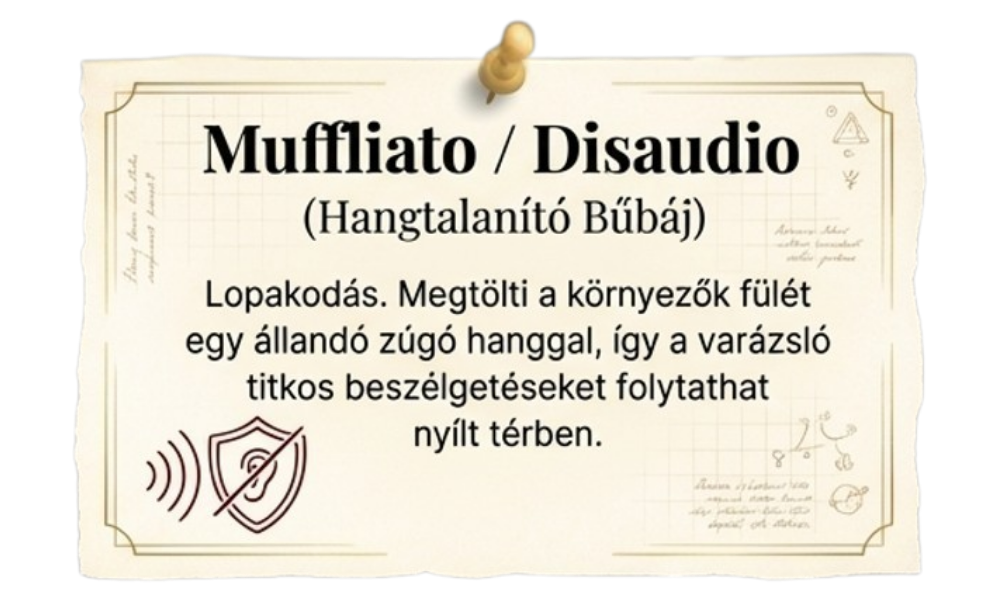
- Muffliato – Muffliato Charm: Fills the ears of nearby people with an inexplicable buzzing sound, allowing the caster to hold private conversations without being overheard. Invented by Severus Snape during his student years, it is called Disaudio in the Hungarian translation.
- Langlock – Tongue-Tying Jinx: Another invention of Severus Snape. It sticks the victim's tongue to the roof of their mouth, preventing normal speech and the pronunciation of spells. In the Hungarian translation, it is known as Pofix. Harry successfully uses it on Peeves and Argus Filch.

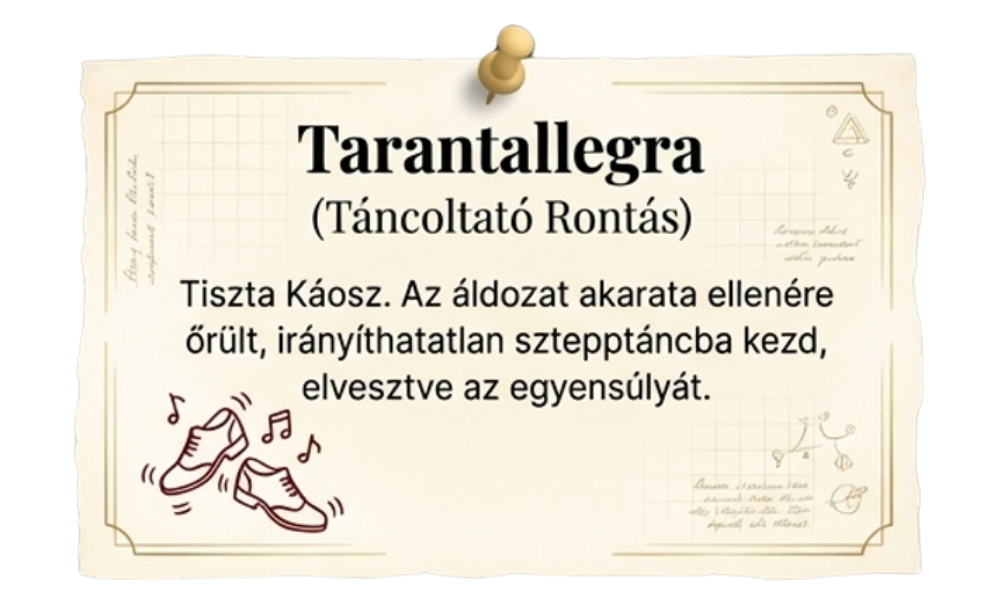
- Tarantallegra – Dancing Feet Spell: Causes the victim's legs to dance uncontrollably against their will. Famous example: Draco Malfoy casts it at Harry during the Duelling Club session in their second year.
- Rictusempra – Tickling Charm: Causes intense tickling sensations, potentially making the victim laugh uncontrollably. Harry uses the spell against Draco Malfoy during the Duelling Club demonstration.
- Evanesco – Vanishing Spell: Makes objects or substances disappear. Known as Evapores in the Hungarian translation, it is also useful for getting rid of failed potion mixtures.
- Episkey – Healing Spell: Can mend certain minor injuries, including a broken nose. The Hungarian translation uses Hippokrax. In the novel Harry Potter and the Half-Blood Prince, Nymphadora Tonks uses it to heal Harry's broken nose; in the film adaptation, Luna Lovegood performs the spell instead.
- Geminio – Doubling Charm: Produces copies of an object, although the duplicates do not necessarily share the original's value or magical properties. Famous example: In Bellatrix Lestrange's vault at Gringotts, treasure protected by a multiplying curse begins reproducing itself when touched, nearly overwhelming Harry and his companions.
- Glisseo – Slide-Making Spell: Transforms the steps of a staircase into a smooth slope. Famous example: Hermione uses the spell during the Battle of Hogwarts to hinder pursuing Death Eaters. A similar sliding-staircase enchantment also prevents boys from entering the girls' dormitories in Gryffindor Tower.
- Orchideous – Flower-Conjuring Spell: Produces a bouquet of flowers, commonly depicted as orchids, from the caster's wand. The Hungarian incantation is Orchidessis. Famous example: Mr Ollivander uses this spell to test Fleur Delacour's wand before the Triwizard Tournament.
- Fiendfyre – Cursed Fire: An exceptionally dangerous form of Dark Magic that creates immense, destructive magical flames, often taking the shapes of monstrous creatures such as dragons and serpents. It is powerful enough to destroy a Horcrux. In the Hungarian edition, it is known as Táltostűz. In the novel Harry Potter and the Deathly Hallows, Vincent Crabbe unleashes Fiendfyre in the Room of Requirement, but loses control of it and is consumed by the flames.
- Piertotum Locomotor: Animates statues and suits of armour. Professor McGonagall uses the spell to summon Hogwarts' stone guardians into battle to defend the castle.
- Morsmordre: Conjures the Dark Mark, the terrifying symbol associated with Voldemort and his Death Eaters. The spell is first encountered at the Quidditch World Cup.
6. The Expanding Wizarding World: Fantastic Beasts and Hogwarts Legacy
The Fantastic Beasts Era (1920s)
- Appare Vestigium: A tracking spell that reveals magical traces in a cloud of golden dust. Newt Scamander uses it while following Tina Goldstein's trail in Paris.
- Revelio: A revealing charm used to expose hidden appearances and disguises. Newt uses it to reveal Gellert Grindelwald beneath his assumed identity.
- Surgito: A counter-charm capable of lifting the effects of certain enchantments, including the love enchantment affecting Jacob Kowalski.
- Finestra: Shatters glass surfaces into fragments. Newt uses it on a jewellery shop window while pursuing a mischievous Niffler.

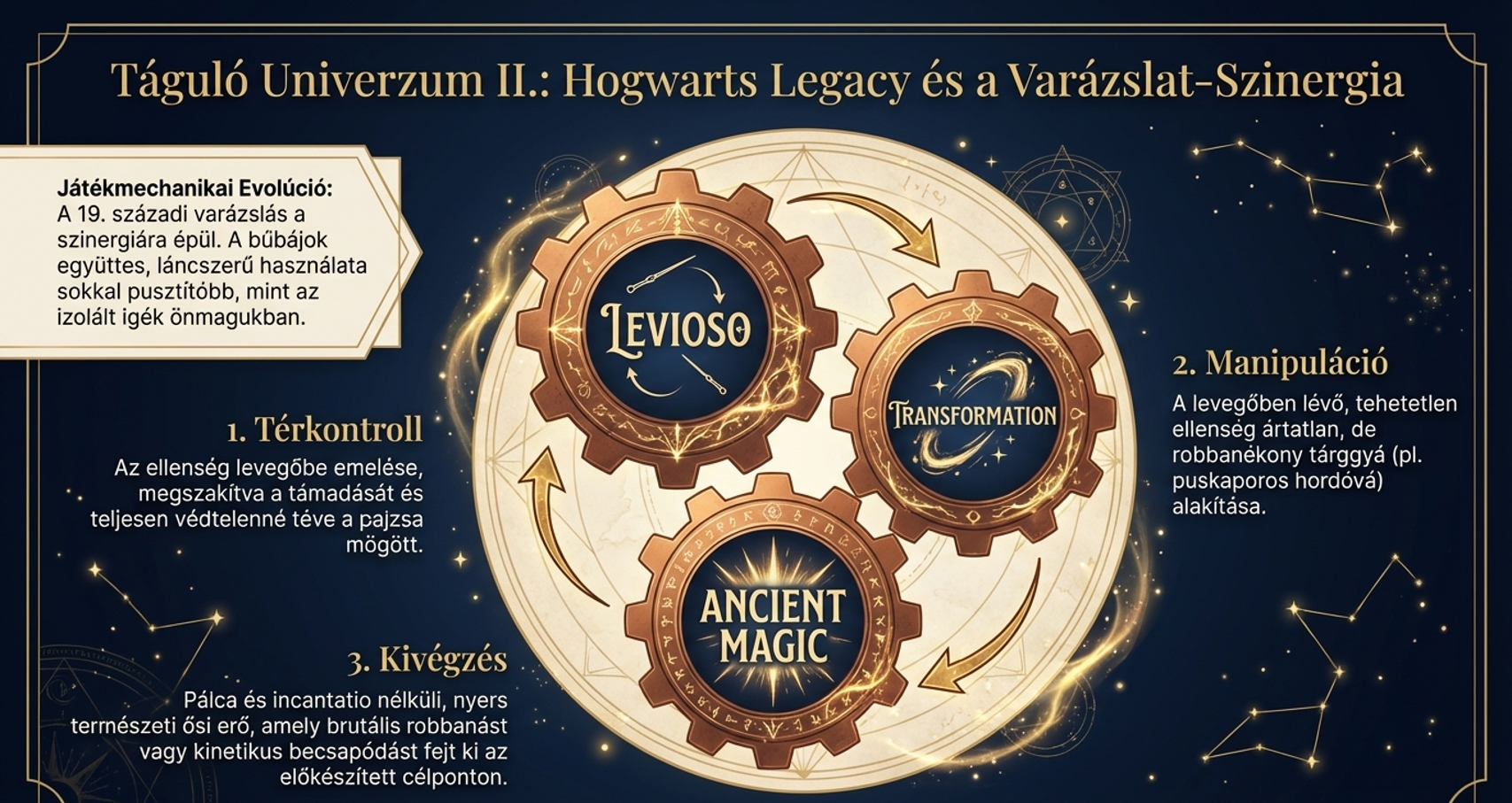
Hogwarts Legacy (1890s)
- Levioso: A combat-focused levitation spell that suspends opponents in the air, leaving them vulnerable to follow-up attacks.
- Ancient Magic: An exceptionally rare form of magic that allows certain gifted individuals to unleash devastating effects, including lightning strikes and powerful physical attacks, without relying on conventional spoken incantations.
- Disillusionment Charm: Makes the caster blend into their surroundings, allowing them to move discreetly and avoid being noticed.
In Hogwarts Legacy, Revelio becomes particularly important. Its expanded detection range allows players to identify hidden treasures, puzzles, points of interest and enemies, even through certain obstacles.
The Lasting Legacy of Magical Language
J.K. Rowling's imaginative use of language – together with the creativity of translators who have brought the books to readers around the world – has shaped a magical system in which spellcasting feels both like a precise science and an art.
Whether repairing a pair of broken glasses or defending against the darkest curses, the Harry Potter universe has taught us something remarkable: words can have real, tangible power to create, transform and destroy.
Perhaps that is part of what makes this world so captivating. For a moment, it invites us to believe that we, too, might be capable of a little magic.
If you'd like to bring that feeling a little closer, choosing your own wand is a wonderful place to begin.
Pieces from the official Wizarding World collections – including collectible wands by The Noble Collection – offer fans more than beautiful display pieces. They can become cherished additions to a personal collection or memorable gifts for someone who loves Harry Potter.
Explore our Harry Potter wand collection and bring a little piece of the Wizarding World into your own!



